Saturday, April 26, 2008

Ofamind and Twine

I was flattered to learn about twine.com the other day. Twine is the long-simmering product of Radar Networks and is remarkably similar to Ofamind in many ways. A bit of digging shows that they used Wikipedia as a basis for their tagging engine. Some reviews have been positive while others less so.

Still, I consider it a vindication of sorts, though I think they will have a hard road business-wise if they believe twine.com has a massive audience appeal. I will just mention that I interviewed with a startup called Backflip in 2000 that went nowhere as well. The business proposition for these kinds of technologies is when they provide real business value to specific knowledge worker communities--when they serve vertical domains to address specific problems.

A minor footnote: I chatted with Radar Network's Nova Spivak several times about collaboration several years back and suspect that there was a bit of, ehhhh, influence of Ofamind on Twine's development (based also on watching my weblogs). I'm just amused that I beat them to the plate with one consultant and three other ongoing engagements simultaneously. Are there diminishing returns beyond a few agile minds in what Bessemer VCs refer to as our new capital efficient web marketplace?

Thursday, April 24, 2008

Folksontamasticons and Ambiguity

Folks might not be all bad, though. For instance, in my Ofamind technology, this blog and social bookmarking sites like del.icio.us, the tags that are attached to documents serve to help people find and retrieve information. Tagging is a counterpoint to the idea of structured ontologies and metadata because it builds from the ground up rather than from the top down. The term coined for these tagging schemes is “folksonomy.”

But are folksonomies useful and consistent? Some studies suggest they are useful under some circumstances. For instance, querying across the titles and descriptions using tag keywords on del.icio.us bookmarks results in a precision-recall of only 50%. In other words, the tags are not also in the texts around 50% of the time, and so provide an additional channel of information for retrieval. People appear to think differently about tags than they do about titles and descriptions.

In terms of consistency, however, a very large number of tags are used only once or are used in differing and inconsistent ways that indicate ambiguity over multiple user subcommunities. Examples might be “architecture” used to refer to computer architecture and building design, or “camp” referring to drama or outdoor recreation.

A couple of interesting questions emerge about how to refine the power of folksonomies.

For instance, can the title and description (or full blog content) be used to automatically suggest tags that are based on other tagging schemes? The Ofamind system partially does this by automatically categorizing web content among your “views” or collections as you surf. It does a fair job, too, for a great deal of content. This can be seen as a personalized metadata tagging filter, since the view association to content is essentially a categorical tag.

Similarly, business taxonomies, controlled vocabularies, full ontologies and other mechanisms could be used at authoring time to try to suggest or overlay more consistent tags onto web content, enhancing searchability and even supporting reasoning about content. For Ofamind, a subproblem that we are currently working on is how to disambiguate extracted people, places and organizations in order to produce high-quality metadata using a combination of human tagging and automatic methods.

Then the folksonomy becomes more of a folksontamasticon, combining folksonomy, ontology and onamasticon in a rare new tag.

Thursday, April 3, 2008

Folk and Psychology

Is the reach of reason limited by our nature? That question came to me during a rather disagreeable conversation recently. The woman I was conversing with spoke almost entirely in vignettes built around folk sociology and psychology.

“Girls always grow up to marry someone like their father.” “You just don’t understand what it’s like to grow up as a redhead.” “My father hates me because I had medical problems as a child.”

Now, I try to be sympathetic of even bad self-analysis insofar as I only have to encounter it in small doses. What good can come from challenging people under those circumstances? But I increasingly wondered as the conversation continued whether there are limits to our natural capacity to overcome the patterns of folk psychology we use to attach meaning and explanation to our lives. I tried lightly challenging one of the statements and suggested that there was little or no evidence to support a given claim. Her response was that she just gave me evidence—a single example. There was some hemming and hawing about how she acknowledged that that wasn’t scientific evidence, but it was enough for her.

Isabel Allende was recently interviewed and she confessed that her entire writing method and inspiration emerged from trying to construct narratives and folk psychologies to explain her characters. Everything had an explanation and there was little difference for her between magical, religious and everyday occurrences—they all had elaborate explanatory narratives that involved mystical forces, and frameworks for punishment, reward and retribution. Magical Realist at core, but also reflecting the need for fiction to tie together into a structural form that is without the weak sense of doubt that pervades our everyday lives; people are complex and do things for complex and sometimes unexplainable reasons best regarded as tendencies.

But is there any sense in which people can change their cognitive styles? Somewhat, I think, but there are also other factors like dopamine and it’s relationship to magical thinking that are likely more resistant to active attempts at change. Still, the goal of liberal education has always had at its core the notion of refining the mind to enhance our ability to think and process information. It’s the best tool we have.

Tuesday, March 25, 2008

Flaws and Adams

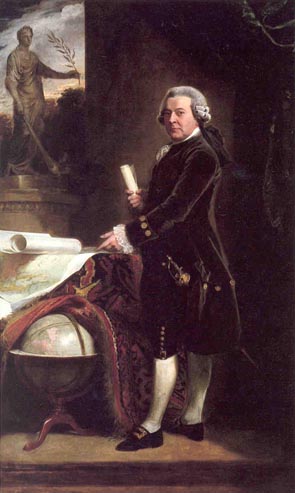
Drawn-in as I am by HBO's John Adams miniseries, and by the portrayal of Adams as a flawed but principled man, I was equally impressed by the quotes that put him in context as a man of his times conflicted with the biases of his era (at The New Republic):
In his summary defense in the Boston Massacre trial, he claimed that the British soldiers had every reason to be afraid of the crowd, "a motley rabble of saucy boys, Negroes and mulattoes, Irish teagues [pigs], and outlandish Jack Tars."
And here:
In fact, one of the causes of the revolution was the Quebec Act, which gave religious protections to Catholics in Canada. This infuriated the colonists. "Does not your blood run cold to think that an English Parliament should pass an Act for the establishment of arbitrary power and Popery in such an extensive country?" wrote Alexander Hamilton. "Your loves, your property, your religion are all at stake." Sam Adams told a group of Mohawk Indians that the law would mean that "some of your children may be induced instead of worshipping the only true God, to pay his dues to images made with their own hands." Fortunately, George Washington realized that it would undermine the colonists' efforts to win support from Canada and France if they were perceived as being anti-Catholic, so he banned the "monstrous" practice of burning effigies of the pope on "Pope Day."

Thursday, March 6, 2008

Social Cohesion and Freedom

Inchoate is perhaps the best word to describe my sustained interest in the notion that somehow we can characterize the complexity of interactions using a standardized grammar or toolkit. Sometimes small pebbles of coherence emerge from this interest, like work on characterizing the complexity of grammars for generating neural networks or interesting music production systems (after great effort, moderate diversity and connectedness is not surprisingly a requirement for both of them!)

Still, I remain a student of the general theme and so am intrigued when people like David Sloan Wilson characterize the role of religion in social cohesion as providing unique evolutionary advantage at the group level (Darwin’s Cathedral: Evolution, Religion and the Nature of Society). While arguing about group dynamics in evolutionary circles is somewhat heretical, Wilson paints a picture that once again uses language like diversity, prediction, connectivity and social support.

From some cross-over of libertarian and paleo-conservative thinking, comes another intriguing data point from The American Conservative. Yes, that’s Pat Buchanan’s magazine. Pat regularly brings up the notion of “balkanization” both in reference to the Balkans as an example of a geopolitical mess, and as a broader metaphor for the problem of diversity in modern societies, so it is not surprising to see his magazine latching onto Robert Putnam’s discourse on changing American civic involvement (Bowling Alone) and related research on the potential drivers for civic strife.

The TAC article by Steve Sailer is somewhat fragmented, jumping around through some sloppy generalizations about ethnic identities (Hispanics and Italians don’t build large organizations because they only trust extended families, for instance), and dipping into wag-the-dog-style political fervors driven by a common enemy. It ends with some minor discussion of how both religion and mandates can improve cooperation between people, with the latter example being the Army limiting career advancement among officers who discriminate.

Now I suspect Sailer and Buchanan consider this grist for a policy mill that aims to reduce immigration to the US (or perhaps be simply more selective about it), but in some ways it works against their more cherished cause of small government and limited government because, given an uncooperative, pluralistic and diverse population, one remaining channel to achieve grander visions is through government action. Government and law become the conduits for coordination by transforming distrust in others into (perhaps grudging) acceptance of institutions. Even Sailer admits as much in noting that:

In America, you don’t need to belong to a family-based mafia for protection because the state will enforce your contracts with some degree of equality before the law.

So I suspect that we have achieved a stalemate of sorts, with the benefits of diversity (I’ll just start with my restaurant options today and leave it at that…) balanced against less social cohesion, but perhaps propped up by institutions that are trusted enough that we are not always suspicious of corrupt abuses of power. That seems like a gentle enough substitution for a civil religion to me, with a more subtle organizing physics that preserves the freedom to think outside the confines of any monolithic pattern of ideation.

Sunday, February 24, 2008

Reason and Social Darwinism

Susan Jacoby’s The Age of American Unreason is my weekend reading. After an initial burst of polemic that was perhaps too careless about the roles of new information technologies and games in modern idea formation, she settles into a detailed analysis of the history of reason, science, pseudoscience and anti-intellectualism in American life. Almost as soon as Huxley hit the lecture circuit with a discussion of Darwinian evolution, social and economic theorists began an expansive integration of the core algorithm into their theories, justifying racism, colonialism, laissez-faire capitalism and, later, eugenics from a loosely critical reading of Darwin.

It was the triumphalist laissez-faire notions that celebrated industrialists under the banner of Social Darwinism that I found the most interesting, since there remains a core of this in contemporary Republican/Conservative reasoning. Indeed, paleoconservatives like Pat Buchanan routinely revive a weakened form of these notions when opposing social programs like affirmative action and justifying positions where individual and racial differences are not correctable by public policy.

And therein is the irony, I suppose, that Social Darwinism informs some of the most anti-Darwinist modern thinkers. Competition is good for you. Still, the most telling development to emerge from the same era is that ideas have a certain prolific vitality, mutating outward from basic scientific observations into new formulations that reengineer the scientific core into a series of quasi-scientific speculations. Then, over time, the speculations are whittled down and even completely discarded as the pseudoscience is ejected and only the core remains.

Tuesday, February 12, 2008

Craziness and Poop

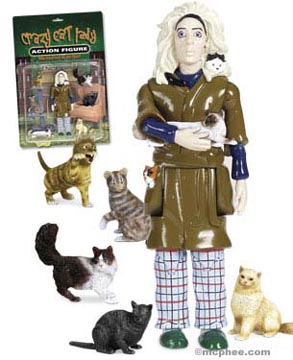
My subscription to Psychiatric Times always has something interesting associated with it. Bottom line: the stereotype of the crazy, isolated cat lady may be dead-on true.

Environmental Factors in Schizophrenia Three epidemiological studies bolster the evidence for infectious and social influences on the development of schizophrenia. Swedish national registers show an association between psychotic illness and childhood viral, but not bacterial, infections of the central nervous system (CNS). Dalman et al. (p. 59) analyzed hospitalizations for CNS infections before age 13 and psychotic illnesses from age 14 onward in children born during 1973–1985. Psychosis risk was almost tripled by childhood mumps exposure and was over 16 times as high after cytomegalovirus exposure. Using blood samples collected routinely by the U.S. military, Niebuhr et al. (p. 99) confirmed a relationship between schizophrenia and toxoplasmosis. IgG antibodies to Toxoplasma gondii were compared in service members medically discharged with schizophrenia between 1992 and 2001 and matched healthy subjects. The antibody level was nearly 25% higher for the subjects with schizophrenia in the 6 months preceding the diagnosis or after it. Dr. Alan Brown examines these two studies in an editorial on p. 7. Veling et al. (p. 66) identified social isolation as a risk factor for psychotic disorders among immigrants in The Hague. City records provided the ethnic backgrounds and locations of residents who received a first diagnosis of psychotic disorder over 7 years. Immigrants in neighborhoods with high densities of immigrants from the same country had a rate of psychotic illness similar to that of native Dutch residents, but those in neighborhoods with low densities of the same ethnic group had a rate more than double that for the Dutch.